
Dematerializing Without a Phaser
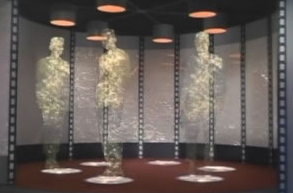 Like most people, I grew up craving stuff. I needed every Star Wars action figure. Getting every playset was slightly prohibitive, so I sated my collecting drive with the range of action figures. I then got into VHS, taping every single Star Trek episode off the air, and displaying them proudly. Games were always expensive, and risky, since there was no way to preview them, so I worked to get the few that I was sure I wanted. And of course there were books. My uncle gave me his reader copies of Foundation and Dune, and I was utterly spellbound. From that moment, I voraciously consumed science fiction, historical fiction, modern thrillers, science, psychology, history, and the extraordinary prose of the masterful George Orwell and Vladimir Nabokov. I read a book a week for a decade, and kept all of them, except the ones borrowed from a library. It’s from this rich soup that my first effort, Tearing the Sky, emerged. But something else hitched a ride too. [more…]

Predicting Human Civilization
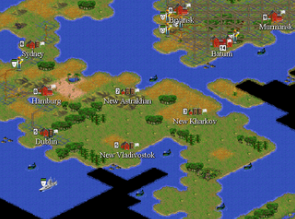 Two days ago, a Redditor going by the name Lycerius posted the resultof his playing the same game of Civilization II for almost ten years. In his words,
“There are 3 remaining super nations in the year 3991 A.D, each competing for the scant resources left on the planet after dozens of nuclear wars have rendered vast swaths of the world uninhabitable wastelands.”
His description is powerful, ominous, and hilarious, which seems a perfect microcosm of Reddit itself. The first thing that popped into my head was the post artfully spliced together the key themes of my two favorite novels, 1984 and Foundation. 1984 for the three super nations locked in an eternal struggle, told from the point of view of a communist totalitarian state, and Foundation for the process of running a model of human behavior into the future. The next thing that hit me was that the social graph may very well be the key to bringing order to the galaxy.
The future of social lies in emotion, a concept that I wholeheartedly agree with. We talk a lot about this idea, and I’m glad he finally put his thesis to screen. When we get weird and esoteric like that, the thing I typically bring up is the idea that social and affinity networks present so much direct data, with increasing veracity, that behavioral patterns start to emerge, allowing you to predict human behavior the same way you can predict what will gonna hit next when you play free slots for example. In Foundation, Isaac Asimov bases the theory of psychohistory on the motion of gases. Individual molecules act randomly, but the collective action may be predicted. In his prequel novels, he explored the challenge of human perception, charting how the biased source material of history could be reconciled with the cold mathematics of psychohistory. This was all before Facebook was invented, and I believe that had Asimov lived he may have used social networking as the solution to the psychohistory challenge. [more…]
The Battle for Big Bird
 I want to talk about public broadcasting for a moment. My desire to address this topic arises from the hullabaloo stemming from a comment during the recent presidential debate. In short, candidate Romney made plain his intention to eliminate the PBS subsidy as part of a broader plan to cut wasteful expenditure. His comment was cavalier and the reasoning was questionable. Given the state of political discourse, I wouldn’t expect much more, but this was a bit much even for me.
Let’s start with a basic proposition: public education is not an extravagance.
At some point, humanity managed to organize itself enough to form stable institutions of governance. Early on, one could ask very little from these institutions – protection and dispute resolution (laws) just about did it. As we approached the modern age, progress introduced a broader social contract between citizen and government. Things like clean water, roads, and sanitation became expectations. [more…]
Singing the Blus: Ten Most Wanted
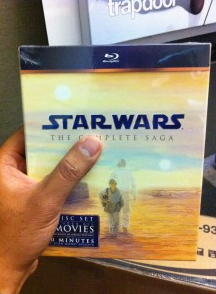 After writing an article on backing away from materialism, and the piece on the retail digital revolution, it may seem utterly hypocritical of me to now call for the top ten blu-ray discs I want. So first, let me qualify my position on materialism and blend it with my view on repetition. First, I seem to be removing material of middle to low quality, use, and value. I’m certainly keeping a few high value items. These things that stay get used or appreciated frequently. They have meaning. Certain games, movies, and books bear repetition, not only for their inherent quality, but for the associated memories and new emotions they trigger. And having Alien on blu-ray has made life a lot better. But it also underscores what’s missing. Here’s a quick run-down on what’s still needed: [more…]